Quick glossary
- ADR / ADRs — Architecture Decision Record(s)
- RFC / RFCs — Request for Comment(s)
- RAPID — Recommend, Agree, Perform, Input, Decide
- PR — Pull Request
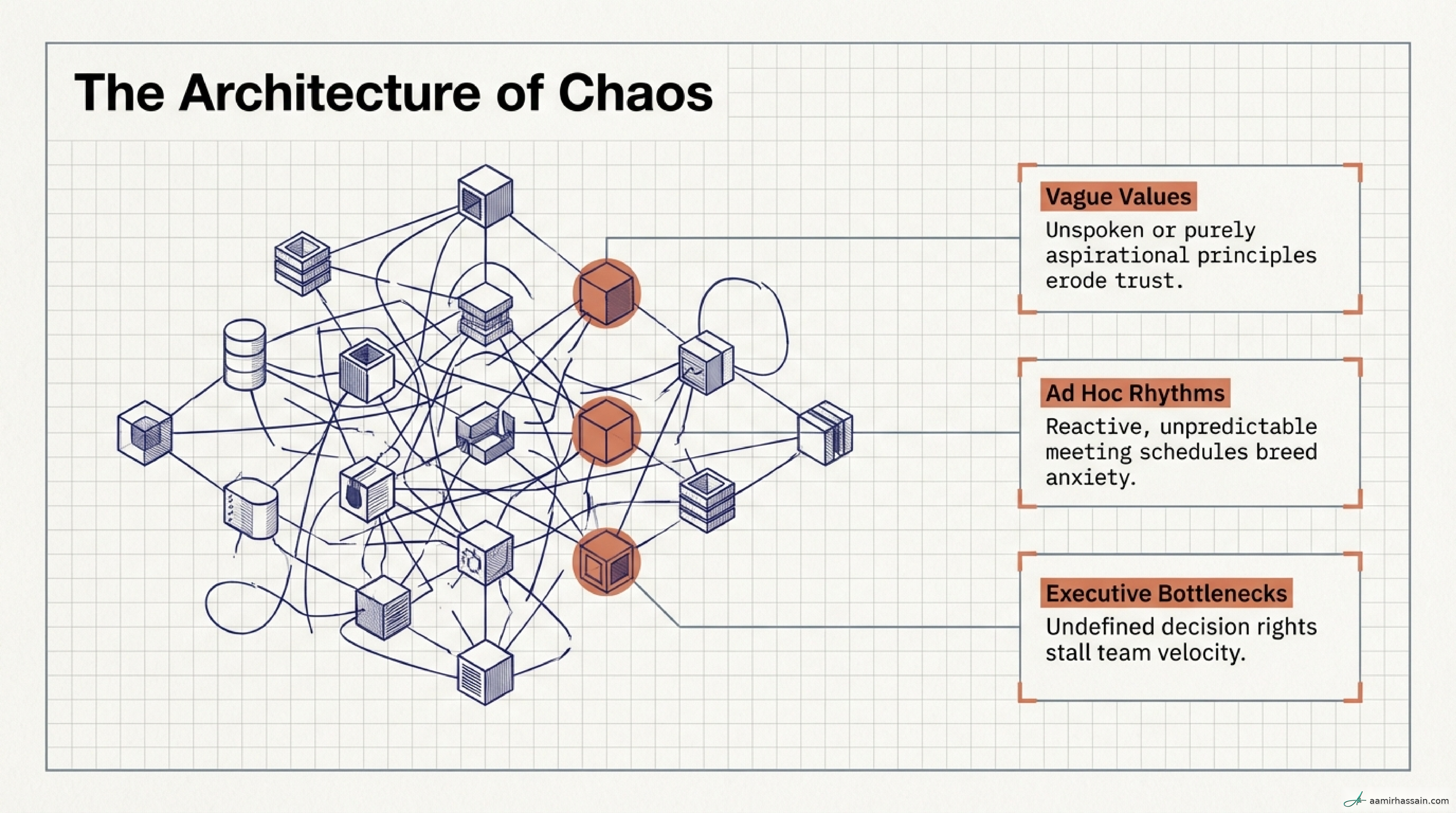
In the world of data engineering, we obsess over system architecture, schema evolution, and interface stability. Yet many leaders treat their management style as an ad-hoc collection of reactive scripts. This “reactive leadership” creates a chaotic environment characterized by sudden, high-stakes meetings, inconsistent decision-making, and a team that is perpetually guessing what their manager actually wants.
When your leadership logic is opaque, velocity stalls. Your team spends more time “debugging” your personality and preferences than they do building platform features. Without a defined schema for how you lead, you become the ultimate single point of failure in your organization.
Your leadership brand is not a marketing slogan; it is your “operating system.” Just as a robust data platform requires predictable interfaces to scale, your leadership requires a documented framework to provide leverage. This post is for Data Engineering Managers, Platform Leads, and Heads of Data who recognize that intentionality is the only cure for organizational friction.
Key Takeaways#
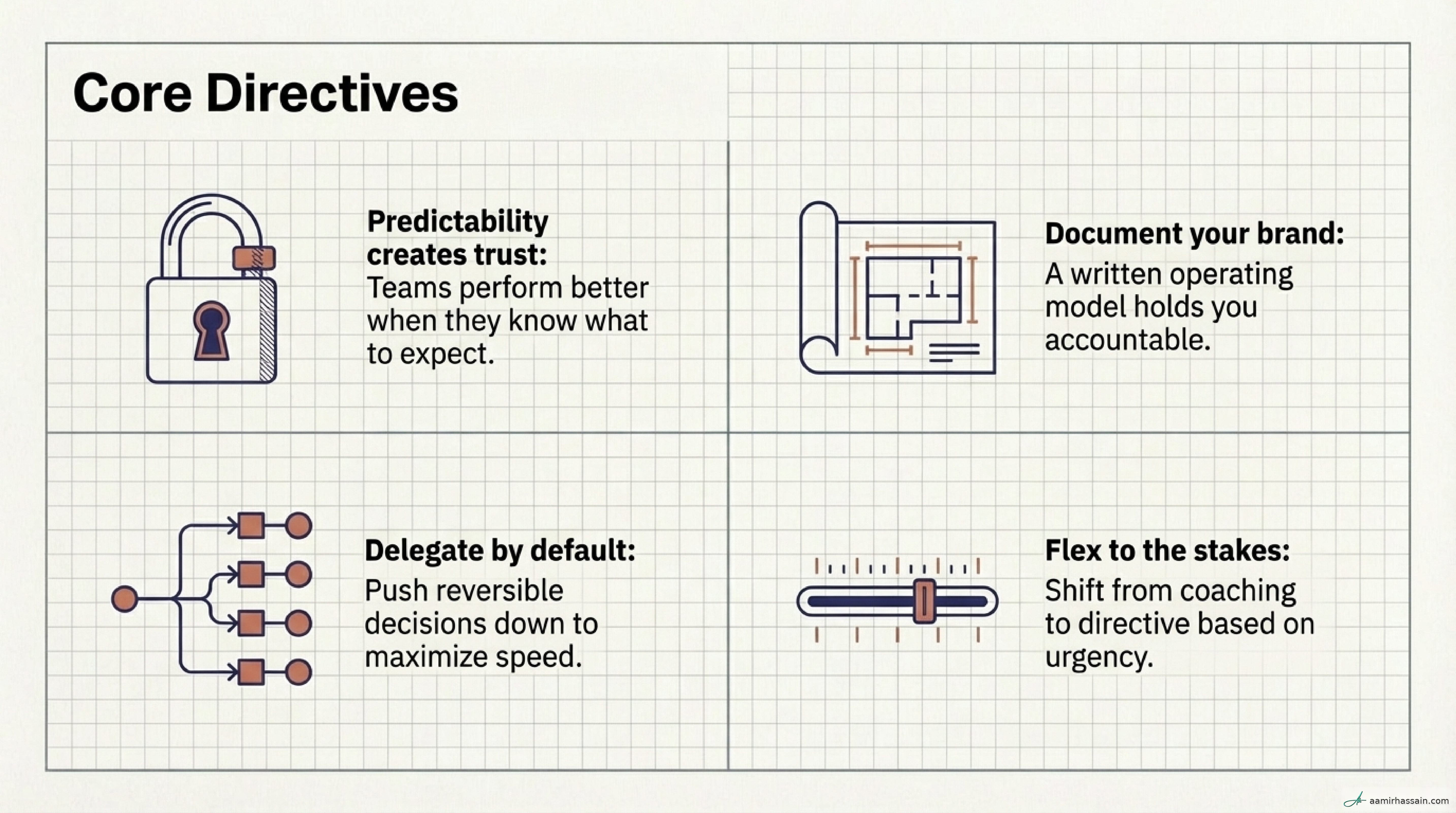
- Predictability builds trust: Teams reach peak performance when they can anticipate their leader’s reactions and rely on a stable operational rhythm.
- The reversibility heuristic matters: Speed is a function of delegation; move fast by aggressively delegating reversible decisions while maintaining high-touch oversight on irreversible ones.
- Documentation prevents bottlenecks: A written leadership brand document removes the need for mind-reading, allowing engineers to make autonomous choices aligned with your vision.
- Cadence heals low-trust environments: Protected, non-negotiable rituals provide the reliability necessary to stabilize skeptical or previously mismanaged teams.
- Principles need teeth: Effective principles are not aspirational buzzwords; they are actionable trade-off frameworks that guide real technical and cultural choices.
- Seniority requires evolution: Moving from Manager to Head of Data requires shifting your operating system from team-level rituals to org-wide operating models.
The Core Model: The Principles-Cadence-Decisions Stack#
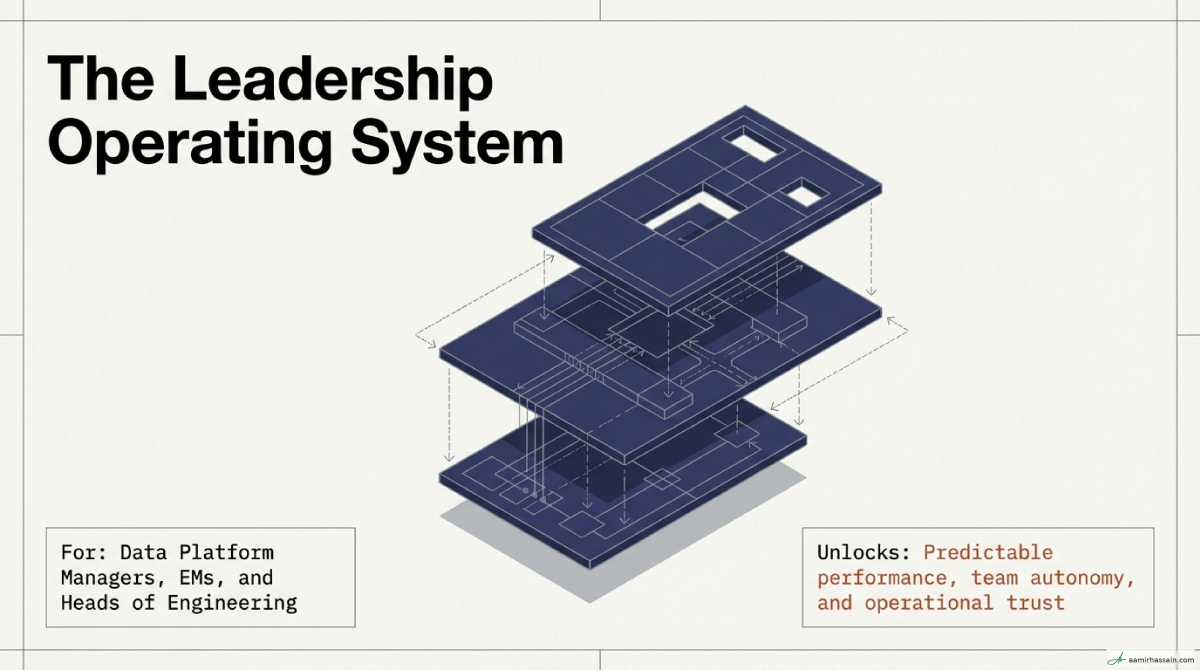
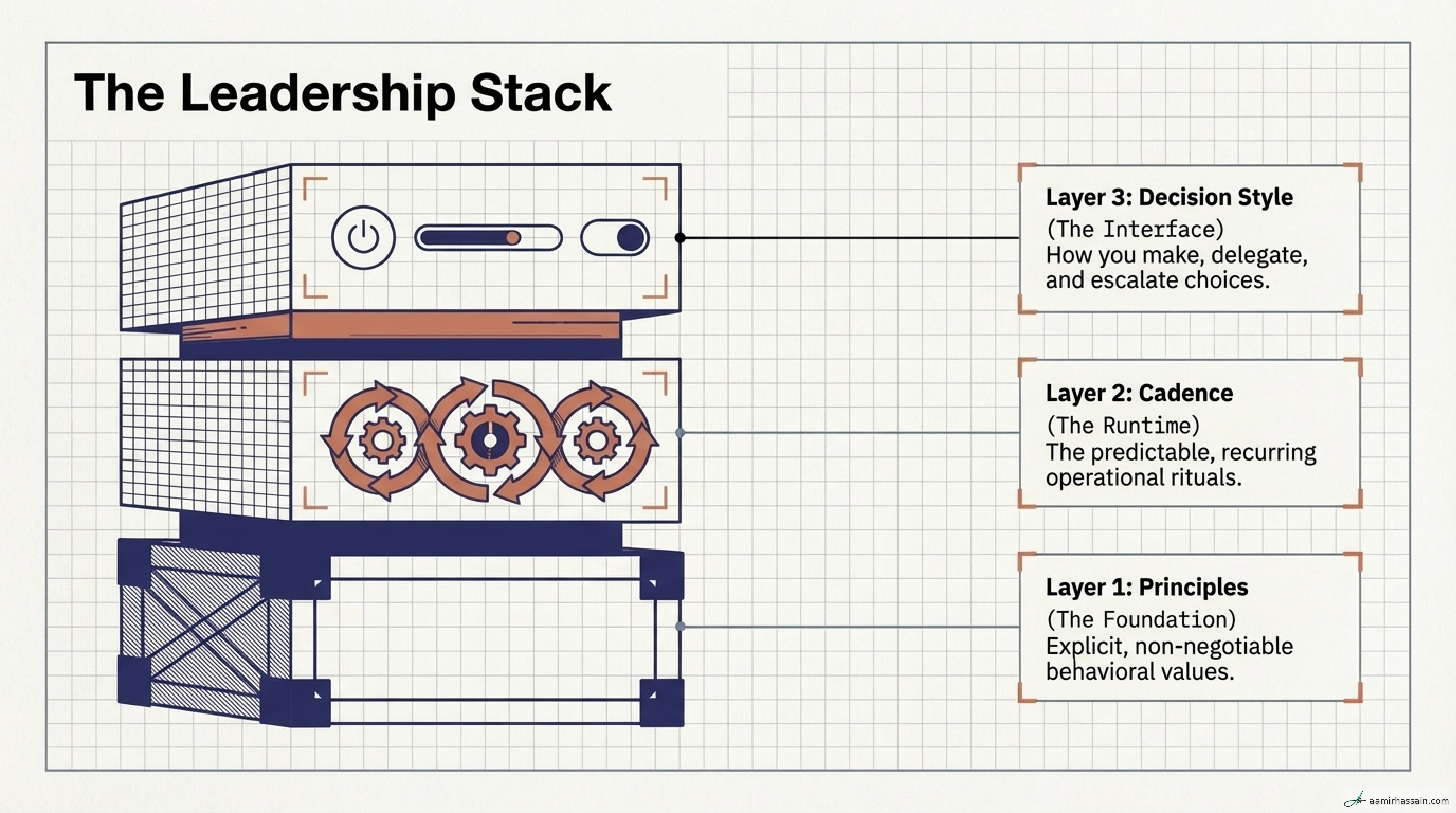
To build a high-leverage data organization, you need a unifying framework: Principles → Cadence → Decision Style. This stack ensures that every action is grounded in a clear logic.
- Principles (the “who”): These define your core identity and non-negotiables. They are the foundational schema for your behavior.
- Cadence (the “how”): These are your recurring operational rhythms. A predictable cadence ensures the system of your team does not fail silently.
- Decision Style (the “who decides what”): This defines how authority is distributed. It clarifies when you will lead, when you will consult, and when you will step back.
If you establish a principle of transparency, you naturally implement a cadence such as public decision logs or ADRs. That infrastructure then supports a consultative decision style, where input is gathered openly before a final determination is made.
The Practical Playbook#
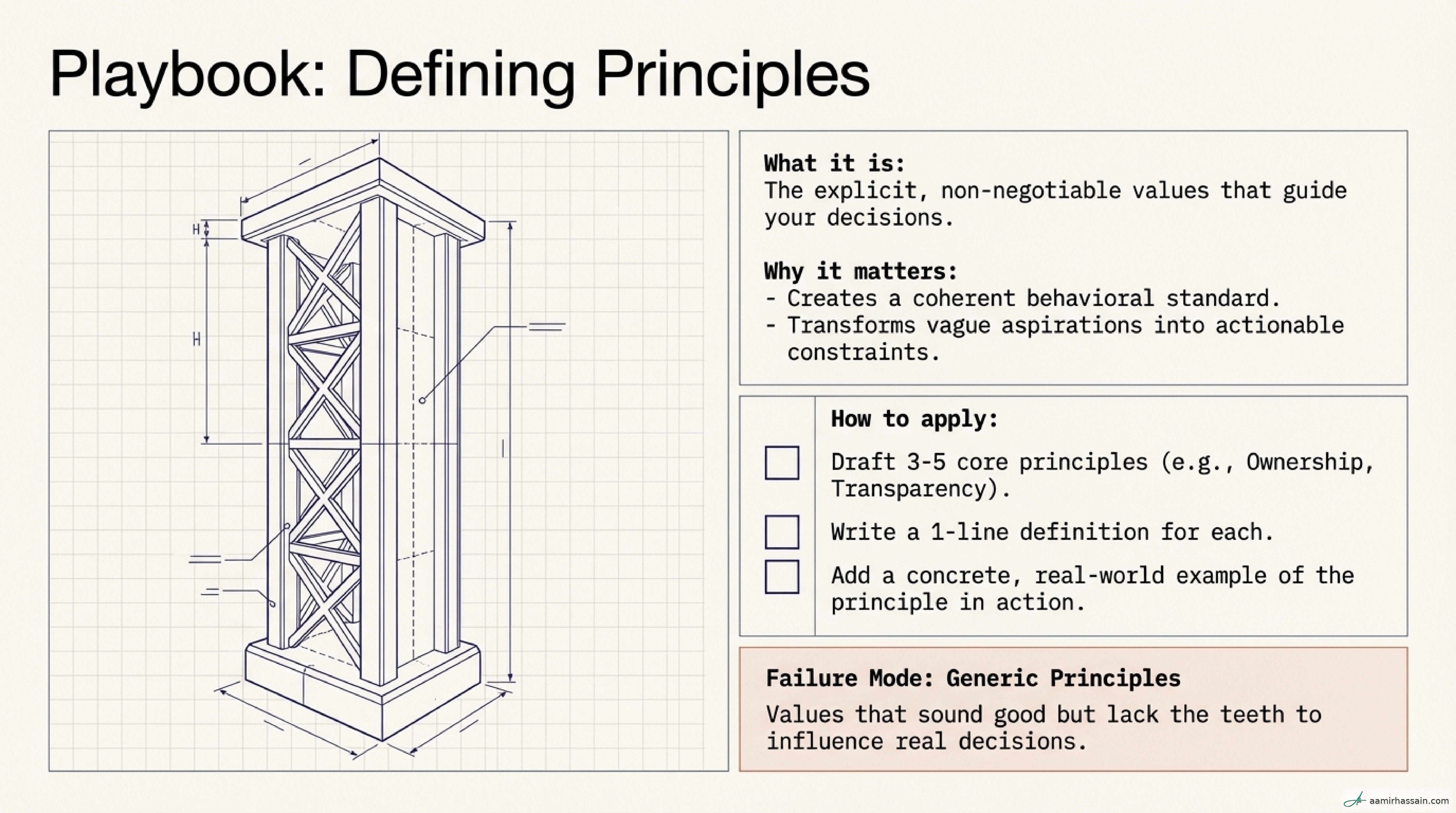
1. Explicit Principles#
Definition: The actionable values that guide your decisions and behaviors, even when following them is inconvenient.
Business impact: Clear principles reduce cognitive load across the team. When principles are well defined, engineers can execute with distributed intelligence, making local decisions that stay aligned with global goals.
Implementation checklist:
- Draft 3–5 actionable principles such as Ownership, Simplicity, or Leverage that have real trade-off value.
- Define each principle with a one-sentence “in practice” statement.
- Identify a specific technical or cultural example where each principle was applied.
- Perform a genericness check. If the principle is something vague like “Excellence,” delete it and try again.
- Publish the principles in your team’s internal documentation, wiki, or Notion workspace.
- Solicit feedback from a peer to ensure your principles are not fighting the existing organization’s culture unnecessarily.
What good looks like:
- The team references principles during technical design reviews without your prompting.
- You can justify a difficult resource trade-off by pointing to your stated principle of leverage.
Failure modes:
- Generic principles: Values that do not guide real trade-offs. Prevention: make sure every principle helps the team choose between two good but competing options, such as speed versus reliability.
- Inconsistent practice: Violating your own principles in a crisis. Prevention: invite the team to hold you accountable during 1:1s and retrospectives.
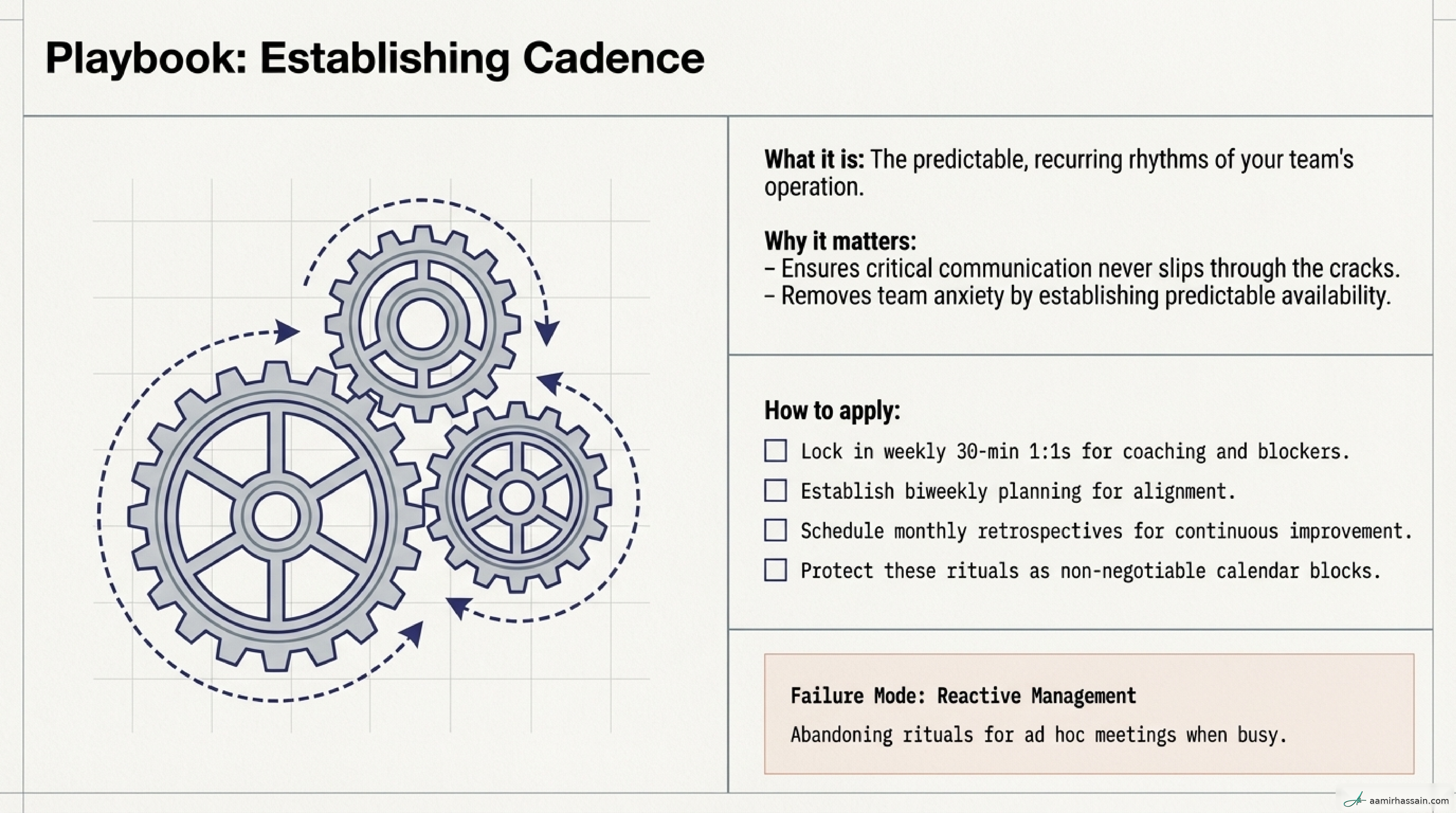
2. Predictable Cadence#
Definition: The recurring rituals—meetings, reviews, and check-ins—that create the heartbeat of the team.
Business impact: Rhythm creates reliability. A predictable cadence ensures blockers are identified before they become incidents and keeps long-term strategy from being swamped by daily operations.
Implementation checklist:
- Map your current rituals such as 1:1s, planning, and retrospectives to a clear recurring frequency.
- Document a statement of purpose for every recurring meeting on your calendar.
- Protect 1:1s and retrospectives as non-negotiable time blocks that are not casually skipped.
- Standardize ritual formats where useful, such as a specific retrospective template.
- Audit meeting load quarterly to ensure rituals still fit the team’s size and scope.
- Clarify your availability for async versus sync communication so deep work stays protected.
What good looks like:
- The team knows exactly when they will have your undivided attention for coaching.
- Information flows across the organization without the need for emergency sync meetings.
Failure modes:
- No cadence: Managing entirely through reactive pings and ad-hoc meetings. Prevention: establish a baseline operating rhythm and stick to it for at least 90 days.
- Process bloat: Applying Head-of-Data-level rituals to a three-person team. Prevention: scale cadence complexity in direct proportion to organizational communication overhead.
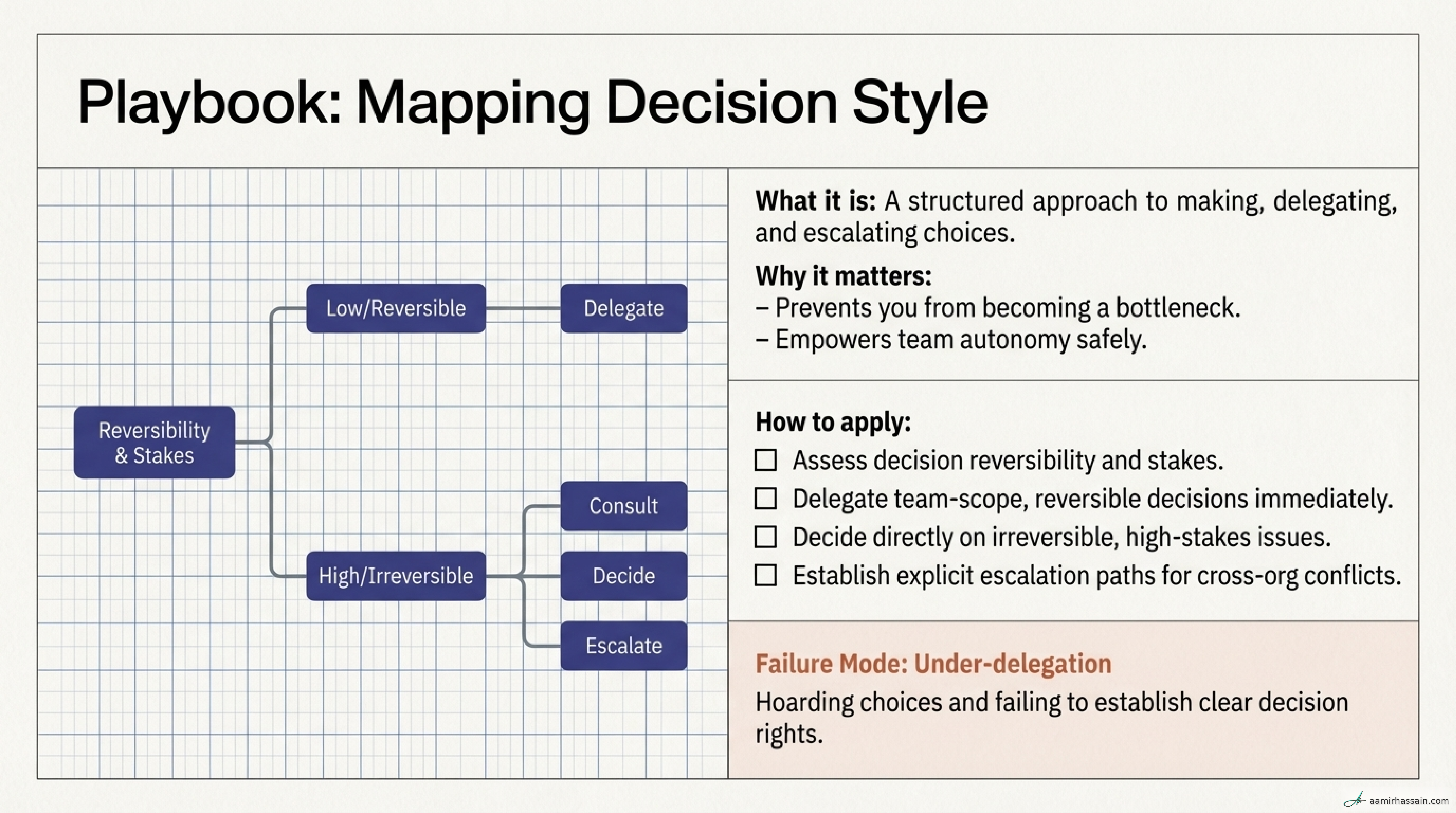
3. Defined Decision Rights#
Definition: Absolute clarity on who has the authority to Recommend, Agree, Perform, Input, and Decide.
Business impact: Clear decision rights maximize velocity. By defining authority in advance, you eliminate the bottleneck effect where technical progress waits for a manager’s approval on reversible choices.
Implementation checklist:
- Categorize decisions by reversibility and stakes.
- Use frameworks such as RAPID for cross-functional projects to identify the ultimate decider.
- Standardize the use of ADRs or RFCs for meaningful technical changes.
- Delegate reversible technical choices to your leads by default.
- Define a clear escalation path for impasses and unresolved conflict.
- Document the rationale for irreversible decisions to build an organizational decision log.
- Practice trust and verify by reviewing delegated outcomes during retrospectives or regular operating reviews.
What good looks like:
- The team moves quickly on tool choices and schema changes without seeking permission for every step.
- Escalations occur only for decisions that cross organizational boundaries or involve high-risk, irreversible trade-offs.
Failure modes:
- Under-delegation: Acting as a bottleneck for every PR or library choice. Prevention: explicitly categorize these as reversible and push the decision back to the team.
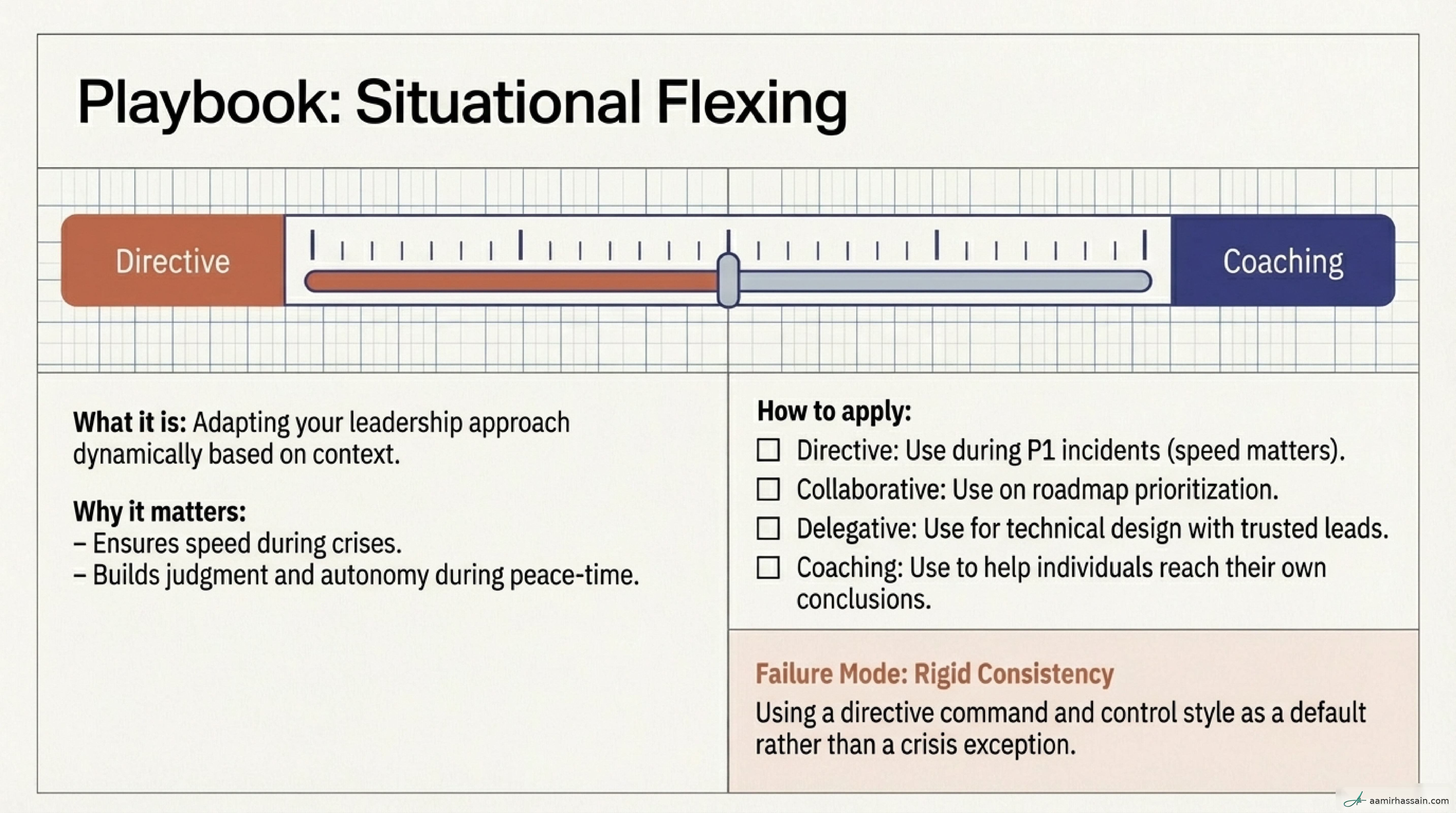
- Over-delegation: Leaving the team unsupported during high-stakes, irreversible moments. Prevention: stay visible and switch to a more directive style when speed and context are paramount.
A Worked Example: Rebuilding Trust During Onboarding#
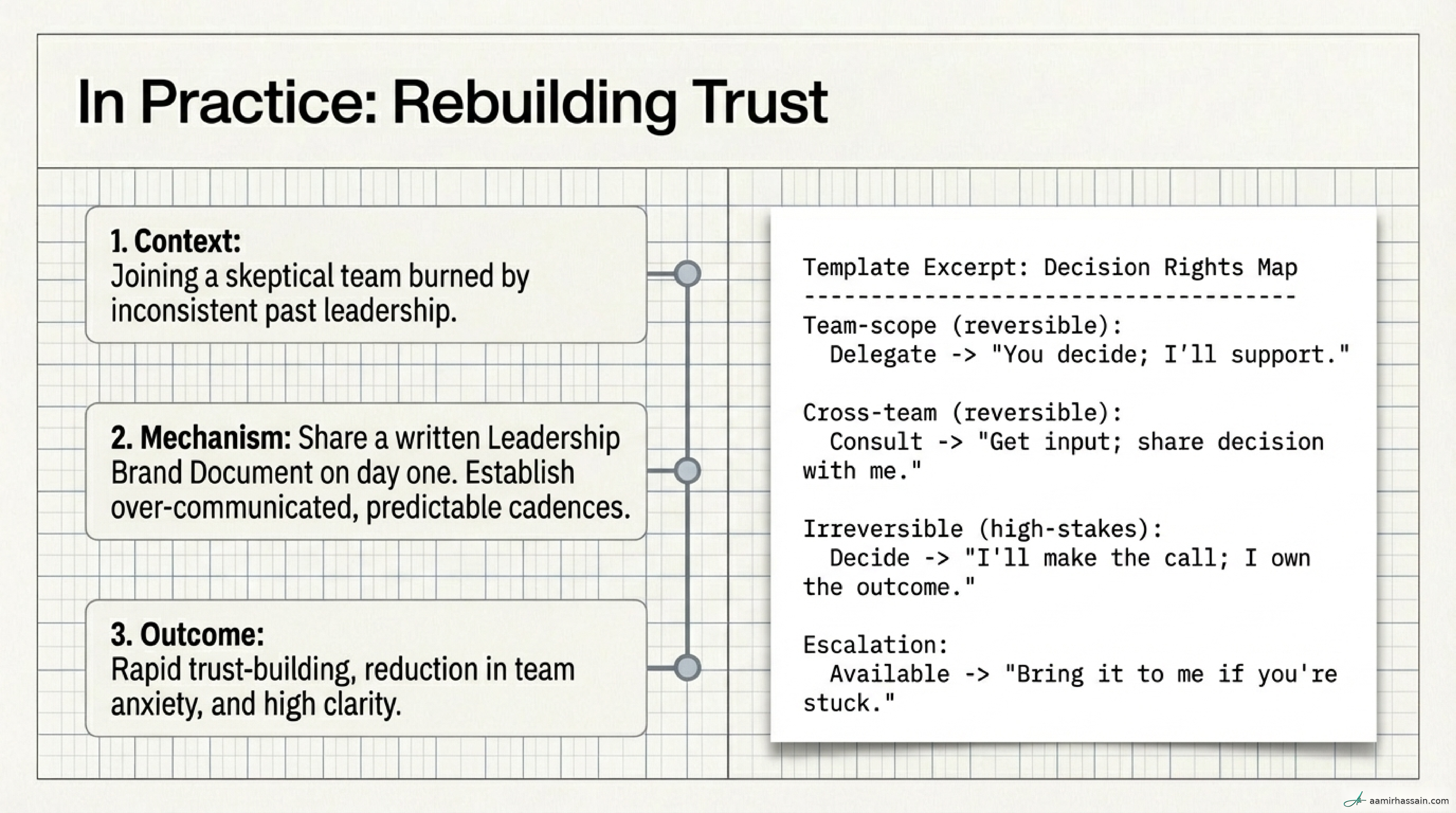
Imagine a new Engineering Manager joining a Data Platform team that has been demoralized by a previous leader who was opaque and reactive. The team is skeptical, and velocity has plateaued because no one knows who is actually allowed to make decisions.
Instead of spending months trying to earn trust through vague relationship building, the new leader shares their Leadership Brand Document in the first week. They define their brand as a predictable interface.
By explicitly stating their operating system, they replace ambiguity with a contract. They clarify that they will be directive during outages, consultative on the roadmap, and consistent about protecting 1:1s as a space for coaching.
The result is that transparency becomes a trust catalyst. The team stops guessing and starts shipping because the rules of engagement are documented. The Leadership Brand Doc becomes the predictable interface that allows the team to focus on technical delivery.
Leadership Brand Snippet#
A practical leadership brand document might look like this:
- Principle — Ownership: We own outcomes, not tasks. “If it’s broken, we fix it—don’t wait to be asked.”
- Principle — Transparency: Context is shared openly. “I publish decision logs and ADRs so you know the why.”
- Principle — Bias for Action: Progress is more valuable than perfection. “Ship and iterate; don’t over-plan reversible changes.”
- Cadence — Weekly 1:1s: 30 minutes focused on coaching, blockers, and career growth. Non-negotiable.
- Cadence — Monthly retros: 45 minutes to reflect, learn, and improve one specific process.
- Cadence — Quarterly planning: Focused on prioritizing and committing to high-leverage platform initiatives.
Metrics That Prove It: The Leadership Scoreboard#
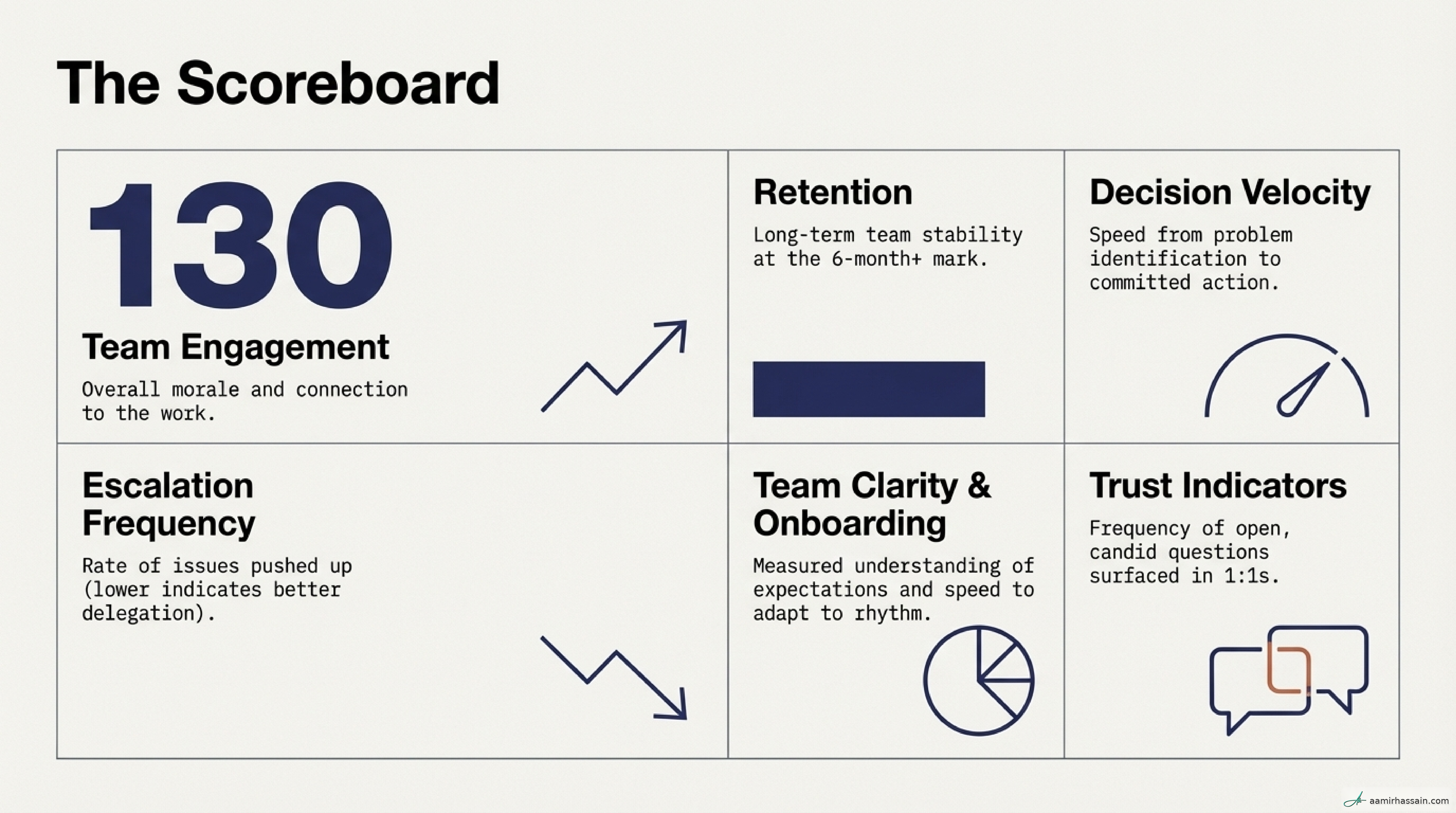
Monitor indicators like these to determine whether your leadership operating system is healthy:
- Decision velocity: Time from proposal, RFC, or ADR to decision. High velocity indicates clear decision rights and high trust.
- Escalation frequency: How often decisions are kicked up to you. Lower is usually better and signals effective delegation.
- Team engagement: Retention rates and survey scores. Strong leadership brands attract and retain high-performing data talent.
- Trust indicators: The openness and candor of questions in 1:1s. Higher trust surfaces systemic risk earlier.
- Onboarding time: Time for new hires to reach full productivity. Predictable systems help people align faster.
- Team clarity: Survey feedback on whether people know what is expected. This correlates directly with operational efficiency and psychological safety.
Leadership Language: Communication Scripts#
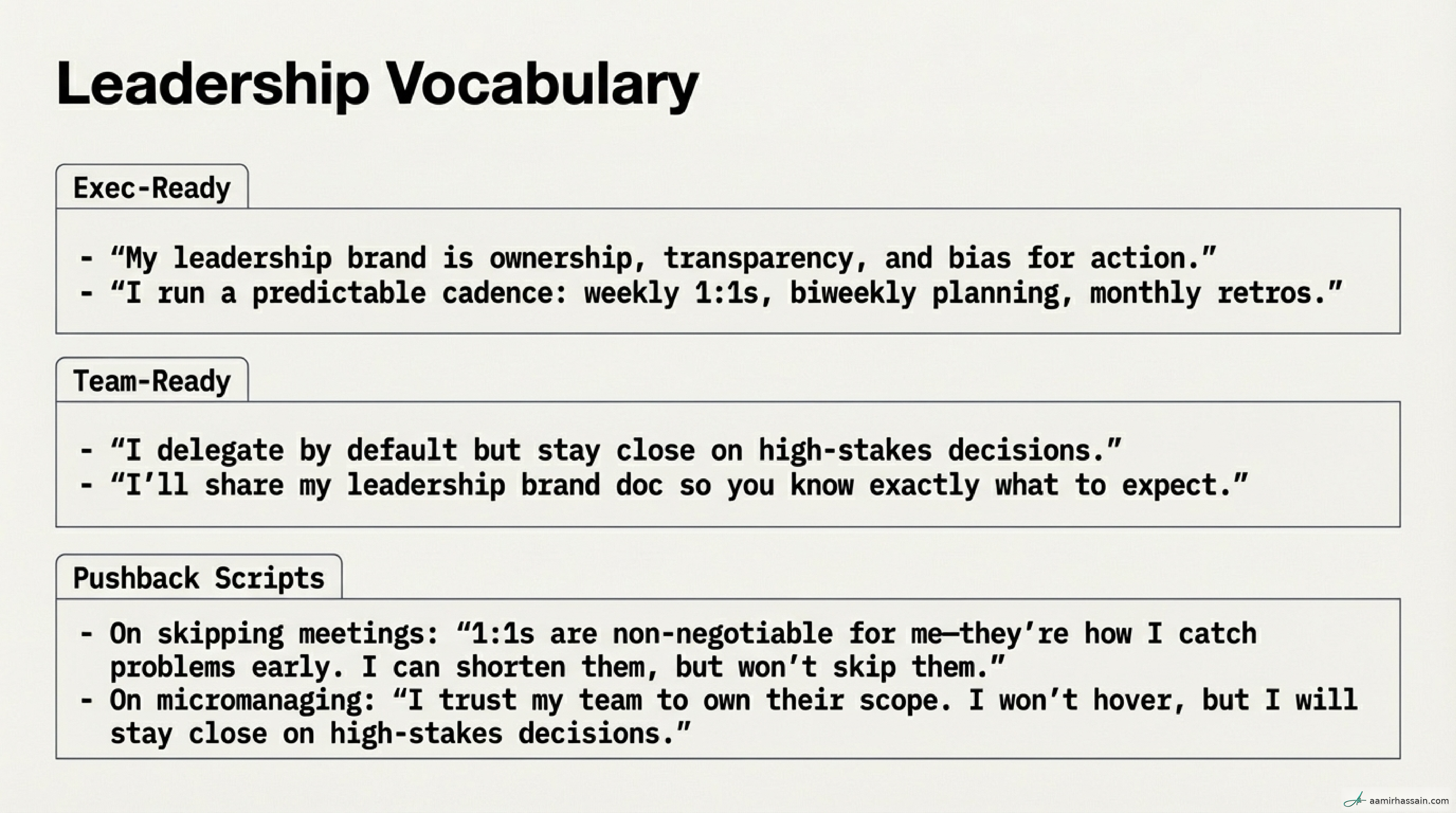
Executive-Ready#
- “My leadership brand ensures high leverage by delegating reversible decisions to the team leads.”
- “I’ve implemented an operating model that prioritizes predictability, significantly reducing the need for ad-hoc crisis management.”
- “By defining our decision rights upfront, we have achieved a measurable increase in technical delivery velocity.”
- “My principles focus on reliability; we build systems and leadership rituals that don’t fail silently.”
- “I use a predictable cadence to ensure my time is spent on high-impact strategy rather than routine blockers.”
Team-Ready#
- “I want to create psychological safety here; it’s okay to fail as long as we learn and iterate.”
- “Tell me what is in your way so I can remove the blockers for you.”
- “I will always give you the context behind a decision, not just a list of tasks.”
- “I expect you to own the outcome of your scope; I am here to support, not to hover.”
- “Please hold me accountable to these principles; tell me if I’m not living up to them.”
Pushback Scripts#
- On skipping 1:1s: “1:1s are non-negotiable for me—they’re how I catch problems early and coach. I can shorten them, but I won’t skip them.”
- On micromanagement: “I trust the team to own this scope. We’ve defined the decision rights, so I’ll stay informed via the ADR, but I won’t interfere.”
- On high-stakes risks: “Because this decision is irreversible and crosses organizational boundaries, I need to make the final call here to own the outcome.”
Common Mistakes to Avoid#
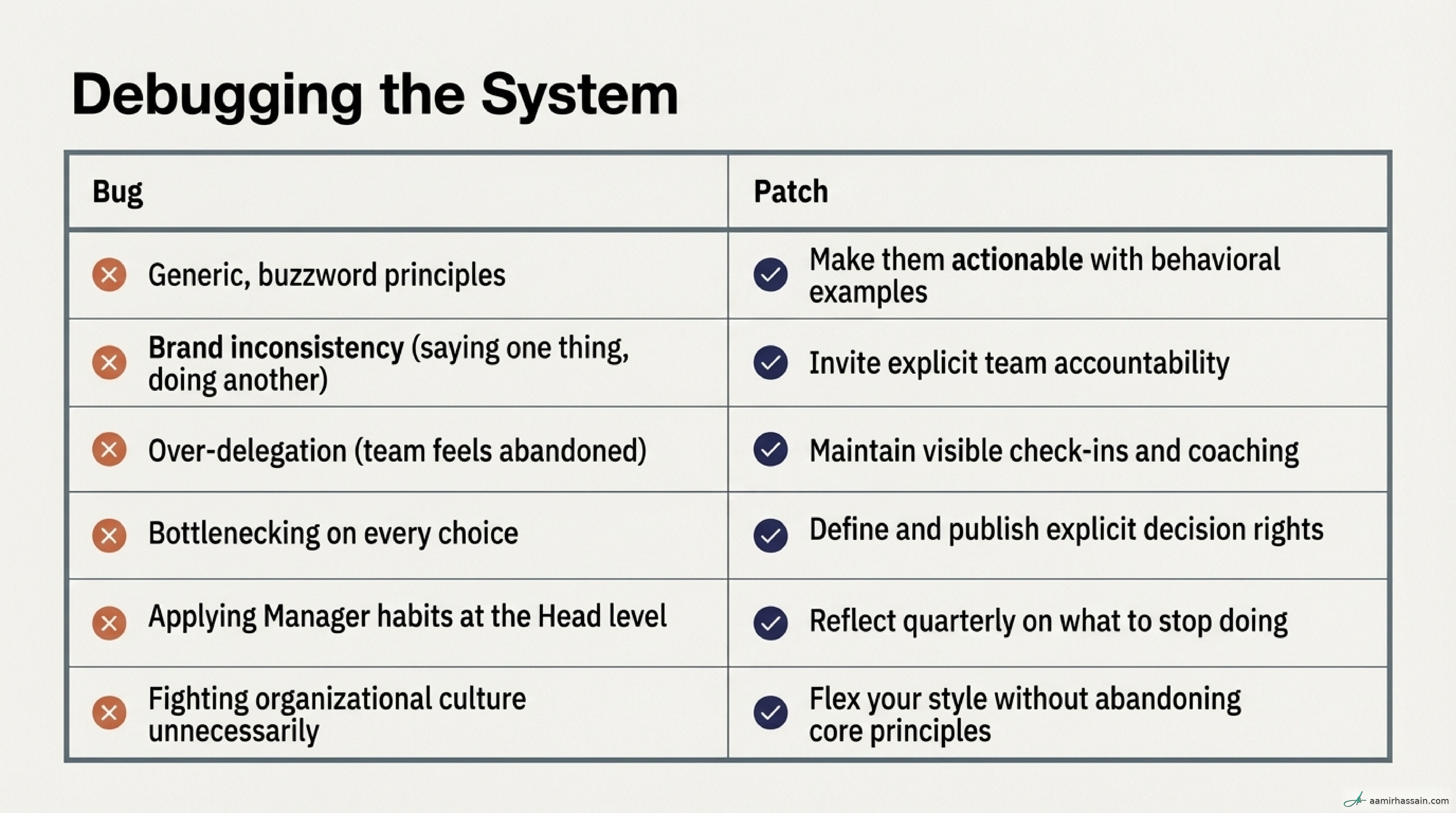
- Generic principles: Using values like “Excellence” that do not help a lead choose between two paths. Fix: make principles actionable and attach specific “in practice” examples.
- Not adapting to scope: Trying to use individual team rituals at a Head of Data level. Fix: review quarterly what you need to stop doing so you can operate at org level.
- Over-delegation: Leaving the team without guidance during high-stakes transitions. Fix: maintain visibility through predictable check-ins and defined escalation paths.
- Inconsistent practice: Documenting a brand but acting reactively in private. Fix: use the brand doc as a living contract and invite anonymous feedback.
- No predictable cadence: Relying on hero culture and late-night ad-hoc meetings. Fix: establish base rituals and protect them as infrastructure.
- Under-delegation: Becoming a bottleneck for every technical design or tool choice. Fix: categorize decisions by reversibility and push easy-to-undo choices to the team.
- Ignoring culture fit: Fighting the existing organization’s DNA unnecessarily. Fix: flex your style to the environment without abandoning your core non-negotiables.
- Process overload: Overcomplicating rituals for a small, high-trust team. Fix: scale cadence complexity only as communication overhead grows.
Close + Next Steps#
Leadership is a craft that requires the same architectural intentionality as a high-scale data platform. By documenting your operating system, you provide your team with the predictability they need to excel. A clear leadership brand becomes the foundation of trust, the engine of velocity, and one of the most important sources of leverage you have as a leader.
This week:
- Draft your three non-negotiable principles and add a one-sentence example for each.
- Audit your recurring meetings to ensure every ritual has a documented purpose.
- Map your decision rights and identify three reversible decisions you will stop making this week.
- Share your draft Leadership Brand Doc with your team and ask for honest input.
If your team had to guess your top priority right now based only on your calendar, would they be right?